World Teachers Day
Who Keeps Learning Going When School Is Interrupted?
Education does not always follow a straight line. For some girls, poverty, distance, caregiving responsibilities, restrictive gender norms, insecurity, child marriage and teenage pregnancy can interrupt their education. When that happens, the question is not only how a girl returns to school. It is also how we keep her learning, growing and imagining what comes next.
Since its inception in Samburu County, Manyatta Homeschooling has expanded to the coastal region, creating community-based learning opportunities for girls and young women whose access to formal education has been disrupted. The approach supports foundational literacy and numeracy while creating opportunities for further education, practical skills and livelihoods.
The July 2026 programme evidence records 1,400 learners enrolled in Manyatta Homeschooling Centres, with 56 girls transitioning to mainstream schools and 100% retention among those transitions. These numbers tell an important story: community-based learning can offer more than a temporary alternative. It can help a girl stay connected to education and create a bridge towards what comes next.
The people who help keep learning going
A pathway to learning needs people who can meet girls where they are. Homeschooling facilitators are part of what makes that possible, bringing learning closer to communities and creating spaces where girls can continue developing their skills even when their educational journeys have taken a different route.
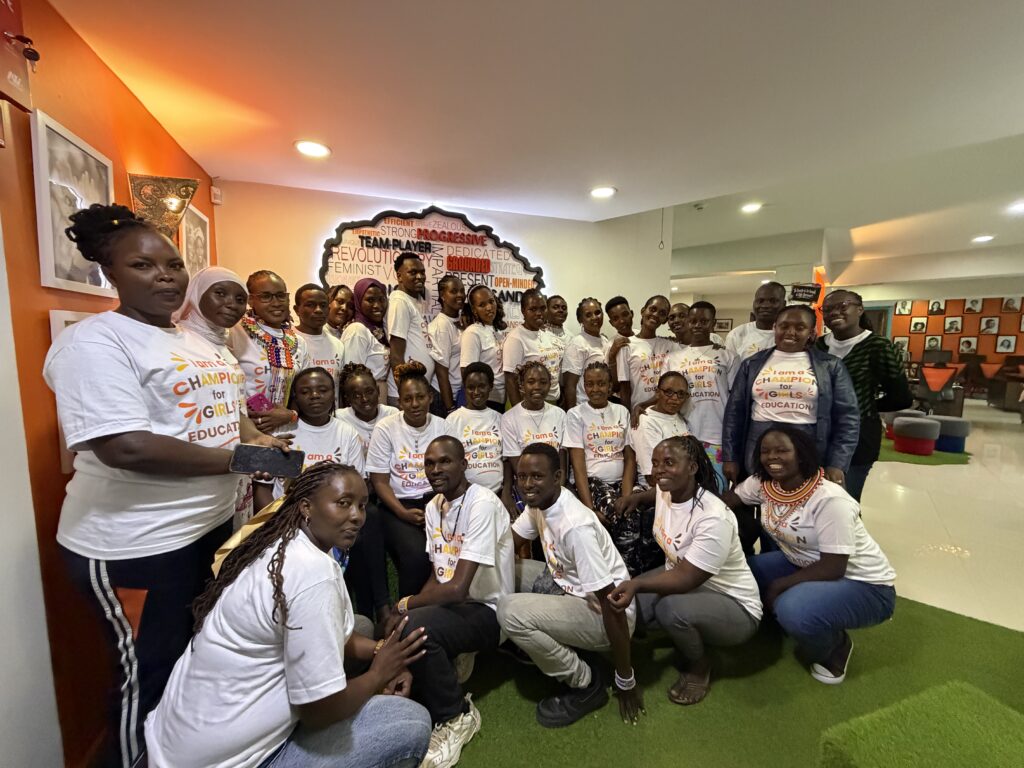
Investing in these facilitators is therefore part of investing in girls’ possibilities. In September, facilitators came together for a five-day Training of Trainers on entrepreneurship using the Street Business School curriculum. The training strengthened their capacity to deliver practical, participatory learning and to adapt activities to the realities and literacy levels of the girls and young women they support.
The training explored confidence and aspirations, identifying business opportunities, starting small, market research, recordkeeping, business planning and money management. Facilitators also experienced activities as learners before practising how to facilitate them, creating space for peer learning, reflection and feedback.
This matters for more than the skills being taught. When girls have experienced interruption in their education, learning can also be a way to rebuild confidence, recognise their own capabilities and begin to see possibilities beyond the circumstances that may have disrupted their path.
It takes a community to keep the door open
The work does not rest with facilitators alone. During International Literacy Day activities in Kwale and Samburu, parents and caregivers, local leaders, educators, government representatives, women’s groups, youth groups and other community actors came together to discuss foundational learning and the barriers that affect girls’ continued education.
Their conversations led to practical commitments, from creating time for learning at home and following up on girls’ education to tracking children who are out of school, strengthening learning spaces and addressing barriers such as early marriage and child labour.
These conversations remind us that a girl’s education is shaped by the people and systems around her. A learning space matters. So does a facilitator who knows how to make learning relevant. So does a parent who creates time for study, a community leader who notices when a girl disappears from the education system, and a system that makes it possible for her to find her way back.
This World Teachers’ Day, we recognise the homeschooling facilitators who help girls stay connected to learning when the conventional path is interrupted. Their work is part of something bigger than a lesson or a classroom. It is about helping girls keep building the knowledge, confidence and possibilities they need to shape their own futures.
When a girl’s path through education changes, her possibilities should not have to end.
Comments are closed.