
From Readiness to Power: What Our Inaugural Board Readiness Training Taught Me About Women, Governance, and the Next Frontier of Leadership
By Joy Zawadi, Executive Director, Akili Dada
Akili Dada is turning 20.
That number holds a lot for me. It carries the faces of girls who walked into our spaces unsure if leadership belonged to them—and walked out knowing it did. It carries the hard-earned lessons of building feminist leadership in a world that often rewards silence over courage. And it carries a question that has been tugging at me more insistently in recent years:
If women are leading movements, communities, and organizations—why are so many of the rooms where power is governed still not shaped by women’s influence?
This month, as part of Akili Dada’s 20th anniversary agenda, we took a bold step into what I believe is one of the most urgent frontiers of women’s leadership today: boardrooms.
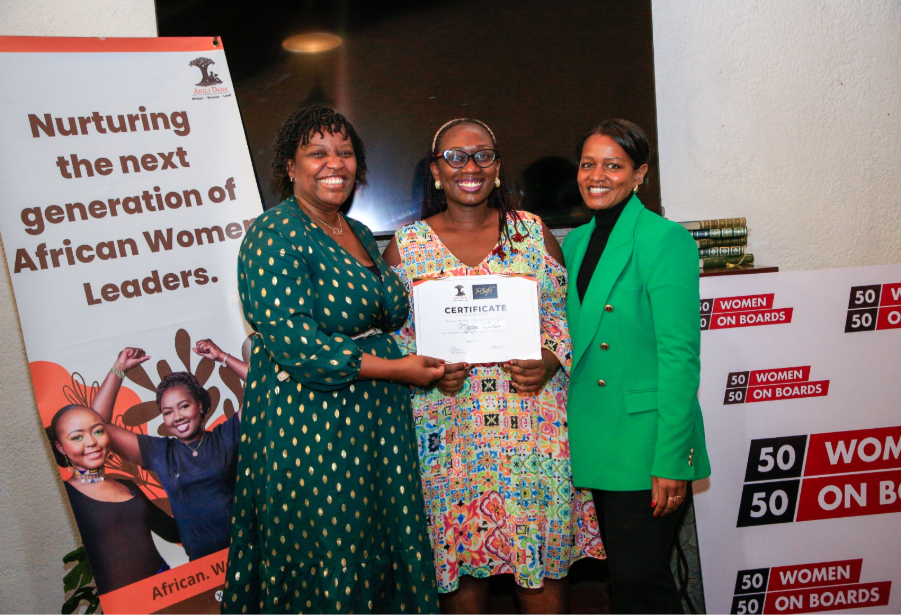
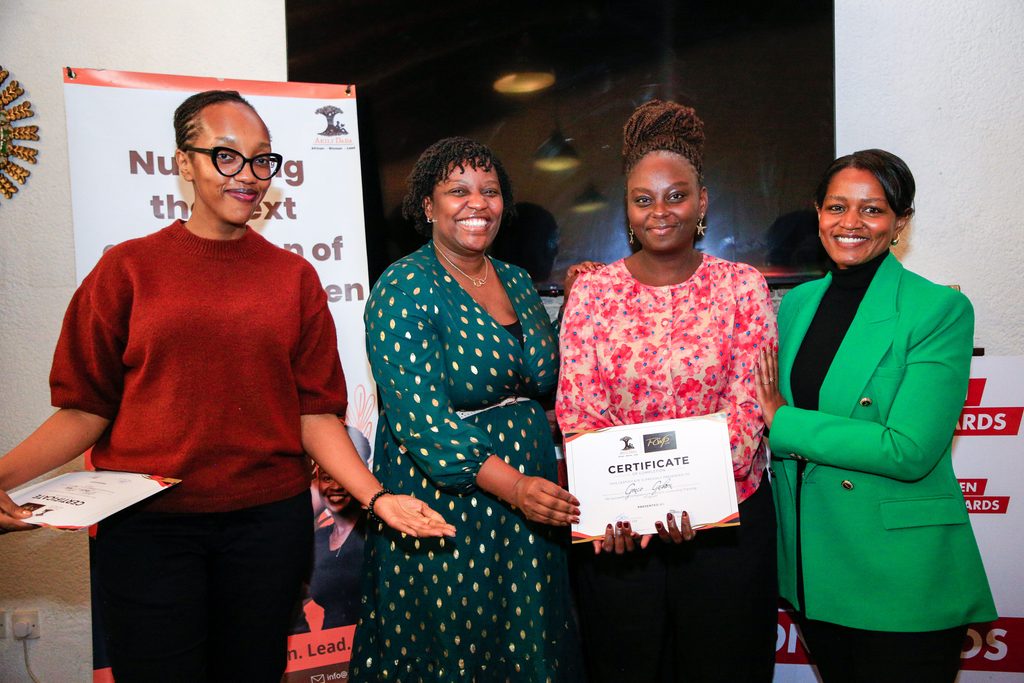
In a strategic collaboration with 50/50 Women on Boards Africa / The CWP Ltd, we successfully delivered Akili Dada’s inaugural Board Readiness Training—four Saturday sessions with 14 remarkable women who are already serving on boards, leading organizations, reporting to boards, or preparing to step fully into governance.
This wasn’t just a training. It was an intervention. A statement. A decision to move beyond representation—and toward readiness, influence, and power.
Boardrooms are not ceremonial. They are consequential.
One of the most important things we named early in the program is something many people are taught to overlook:
Boards are not honorary platforms. They are accountability structures. They are power structures.
They are where institutional direction is set—sometimes boldly, sometimes quietly, sometimes behind closed doors. They are where:
- strategy is approved (or stalled)
- budgets are scrutinized and resources allocated
- risk is surfaced (or ignored)
- CEOs are held accountable
- reputations are protected—or damaged
- partnerships are accepted—or declined
- futures are imagined—or limited
When we talk about systems change, we cannot skip the governance layer. Because systems are not only changed by protests and policy—they are also shaped by decisions, oversight, and stewardship. And boards sit at the intersection of all three.
This training reaffirmed something I deeply believe: leadership is learnable.
Across four sessions, we explored board fundamentals, fiduciary duty, finance literacy, risk, fundraising strategy, board dynamics, imposter syndrome, and strategic communication. But beyond the content, something deeper happened:
Women began to see themselves not as “invited guests” in boardrooms, but as governors—people with a mandate to ask sharper questions, hold the mission steady, and steward institutions with integrity.
We talked about reading financial statements not as a technical hurdle, but as a leadership skill: learning to ask, “What story are these numbers telling, and what are they not telling?”
We talked about risk not as fear, but as responsibility: anticipating crises before they become headlines, protecting people and purpose.
We talked about fundraising not as “asking,” but as strategic resourcing: opening doors without compromising values, mobilizing support without performing gratitude, building sustainability without losing mission.
And we talked—honestly—about power. About what happens in boardrooms when gender, age, class, race, or hierarchy enter the room with you. About the informal alliances that shape decisions before the meeting begins. About the quiet ways women are sometimes expected to contribute without being seen as authoritative.
And we named it clearly: to sit in these rooms and shape outcomes, women need more than presence. They need power literacy.
A feminist leadership pipeline must include governance.
For two decades, Akili Dada has invested in girls and young women to lead social, economic, and political change. That work remains the heartbeat of who we are.
But as we enter our next decade, we are expanding the ecosystem—because the world our girls are inheriting requires leadership at every level, including the spaces where institutions are governed.
Board readiness is not a “nice-to-have.” It is a strategic investment in the resilience of organizations and movements. Strong boards can mean:
- better stewardship of resources
- stronger oversight and accountability
- clearer strategy and sustainability
- healthier leadership transitions
- reduced governance crises
- more credible and trusted institutions
In other words: when women are prepared to govern, institutions become more resilient. And when institutions become more resilient, communities have a stronger chance at dignity and justice.
Training is necessary—but not sufficient.
One of the clearest insights from this cohort is that many board opportunities are not publicly advertised. They travel through relationships, trust, reputation, and networks.
So, if we are serious about women’s access to boardrooms, we must build more than training programs. We must build pathways.
That’s why we are envisioning the next stage of this work as an ecosystem: future cohorts, practical clinics, and an alumni/sponsorship pathway that supports women not only to be ready—but to be placed, supported, and advanced.
Because the truth is: talent is everywhere. Opportunity is not. And readiness without access still leaves too many women outside the door.
A note to partners: this is a moment to invest.
As Akili Dada turns 20, we are marking this milestone not only with reflection—but with innovation.
This Board Readiness Training is one of the ways we are saying: we will not only raise leaders. We will strengthen the institutions that leaders must navigate—and transform.
To funders, philanthropic partners, corporate allies, and individual champions: if you care about gender equality, systems change, and institutional resilience—this is a critical place to invest.
Boards decide what gets funded. Boards decide what gets prioritized. Boards decide what gets protected. Boards decide what gets risked.
And women belong at those decision-making tables—not as symbols, but as strategic, competent, values-driven governors.
We are ready to scale this work. And we are inviting partners to build it with us.
If you’d like to support future cohorts, co-create an alumni/sponsorship pathway, or explore partnership opportunities, I’d love to connect.
Comments are closed.